
Private Residence
Kyoto Pavilion
Where silence becomes architecture.
Location
Kyoto, Japan
Year
2026
Area
420 m²
Duration
28 months
Overview
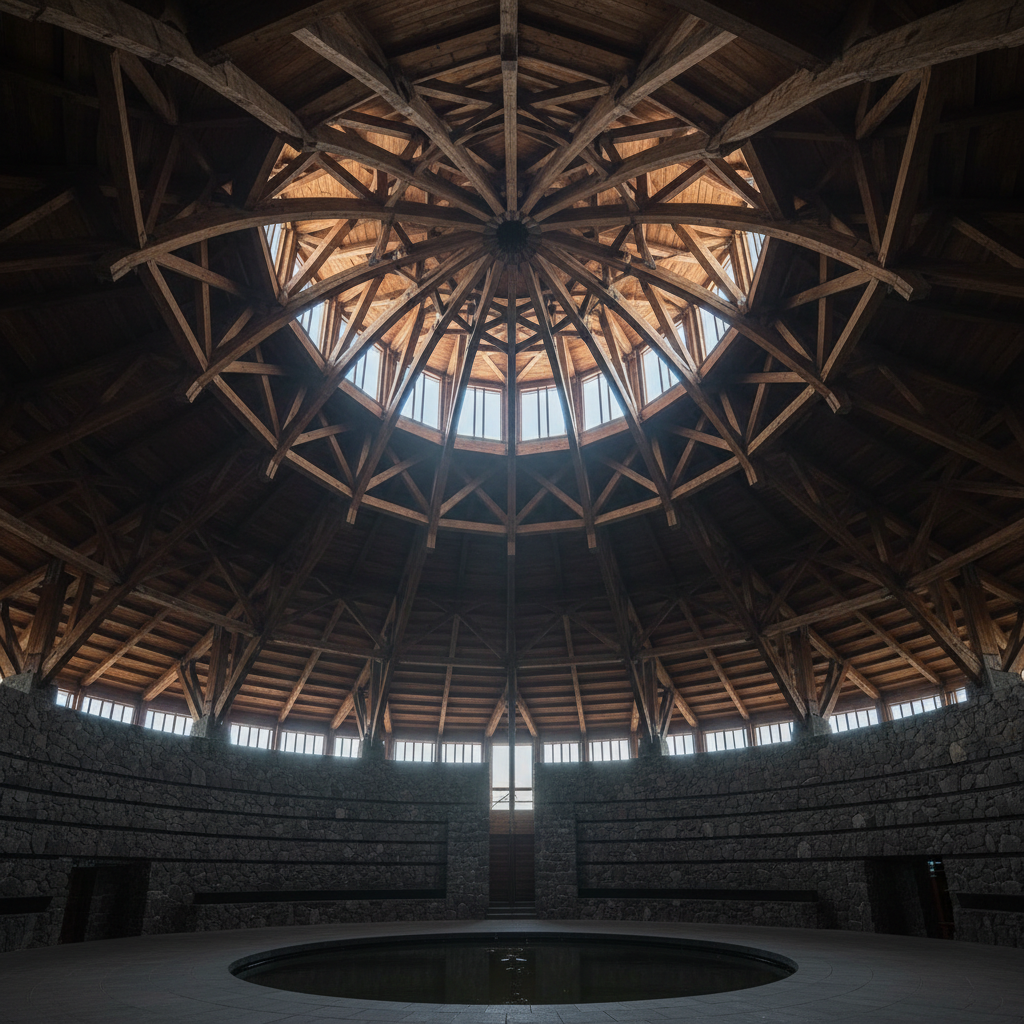
The Kyoto Pavilion is a private residence conceived as a meditation on stillness. Nestled within a centuries-old cedar grove, the structure dissolves the boundary between interior and landscape through a series of sliding shoji screens, raked gravel courts, and a single continuous timber volume that floats above the ground plane.
The Challenge
The site presented a profound tension: a client seeking radical minimalism within a heritage-protected grove where no tree could be removed and all construction had to be reversible. Every structural decision had to negotiate between permanence and impermanence.
Our Approach
We adopted a post-and-beam system using reclaimed hinoki cypress, allowing the pavilion to rest lightly on the land. Interior volumes were defined not by walls but by changes in ceiling height and material — washi paper, dark-stained timber, and polished concrete — creating spatial sequences that shift with the quality of light throughout the day.
Photography
Timeline
Jan – Mar 2024
Site Analysis & Brief
Intensive site documentation across all four seasons, heritage consultation, and client brief refinement through a series of immersive workshops in Kyoto.
Apr – Jul 2024
Concept Design
Development of the floating timber volume concept, material palette selection, and landscape integration strategy in collaboration with Kyoto-based garden master Hiroshi Tanaka.
Aug – Dec 2024
Design Development
Detailed resolution of the post-and-beam structural system, shoji screen joinery details, and mechanical integration concealed within the floor plane.
Jan – Nov 2025
Construction
On-site construction with a specialist team of Kyoto carpenters (miyadaiku) using traditional joinery techniques alongside contemporary structural engineering.
Jan 2026
Completion
Final handover, photography, and documentation for publication.
Team

Principal Architect
Elena Vasquez
Elena leads AURA Studios with 18 years of experience in luxury residential architecture across Asia and Europe. Her practice is rooted in the phenomenology of space and material honesty.

Project Architect
Kenji Mori
Kenji brings deep expertise in Japanese construction traditions and contemporary structural engineering. He led the on-site coordination with the miyadaiku carpentry team.

Landscape Collaborator
Hiroshi Tanaka
A fourth-generation Kyoto garden master, Hiroshi designed the raked gravel courts and moss gardens that frame the pavilion, drawing on the karesansui tradition.
Recognition
- AR House Award 2026 — Shortlisted
- Japan Institute of Architects — Residential Excellence
Next Project
View Next